If your swimmer is already on a swim team, you may be asking yourself:
“Why would they need private stroke coaching too?”
It’s a fair question.
After all, they’re already attending practices several days a week, swimming thousands of yards, and working hard with their coaches. The answer isn’t that swim teams aren’t doing their job. In fact, great swim clubs are doing exactly what they are supposed to do.
The reality is that becoming a great swimmer requires several different pieces working together at the same time.
At SwimTec, we often explain it like a four-legged table. If one leg is missing, the table becomes unstable. The swimmers who make the biggest improvements are usually the ones developing all four areas of their performance.
1. Club Swim Team Building the Engine
The first piece is cardiovascular fitness.
This is where your swim team shines.
Club practices are designed to build endurance, fitness, race pace, and the ability to perform under fatigue. Swimmers learn how to work hard, push through challenging sets, and develop the conditioning necessary to compete.
There is simply no substitute for regular team practices.
If your swimmer wants to improve, they need to be showing up consistently and putting in the work with their team.
2. Mental Preparedness: Training the Mind
Swimming is as much mental as it is physical.
Many athletes struggle with race anxiety, confidence issues, pre-race routines, goal setting, and staying focused under pressure.
At SwimTec, we work with swimmers on the mental side of the sport. We help athletes understand how to prepare for competition, how to approach races with confidence, and how to develop habits that support long-term success.
The best swimmers aren’t just physically prepared - they’re mentally prepared too.
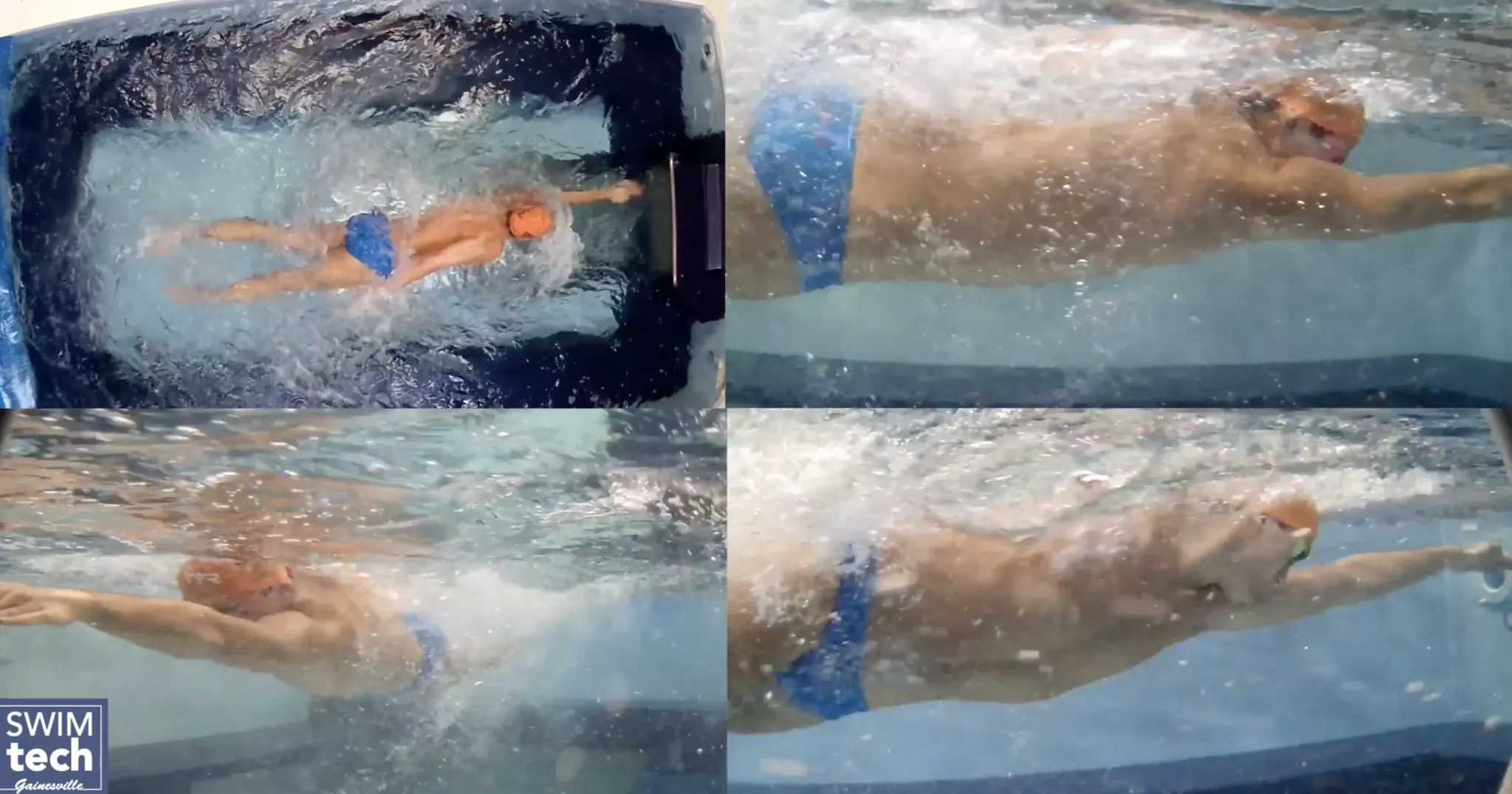
3. Stroke Technique: The Missing Piece for Many Swimmers
This is where 1:1 coaching can have a huge impact.
Let’s think about a typical swim practice.
A coach may have 20, 30, 40, or even 50 swimmers in the water at one time.
Even with excellent coaches, there is only so much individual attention available.
If there are 25 swimmers in a lane group and one coach on deck, simple math tells us that each swimmer is sharing that coach’s attention with 24 other athletes.
That’s not a criticism of swim clubs.
It’s just reality.
Team coaches are responsible for running the workout, managing the group, teaching skills, keeping swimmers safe, and helping the entire team improve.
Because of that, many swimmers continue repeating the same technical mistakes for months or even years without realizing it.
In a 1:1 coaching session, every minute is focused on one swimmer.
One athlete.
One stroke.
One set of corrections.
Instead of trying to absorb coaching intended for an entire group, the swimmer receives feedback specific to what THEY need to improve.
Maybe it’s head position during freestyle.
Maybe it’s a weak catch.
Maybe it’s poor body alignment.
Maybe it’s timing in butterfly or breaststroke.
When those technical issues are identified and corrected, swimmers often see dramatic improvements in efficiency, speed, and confidence.
Just as importantly, proper stroke technique helps protect the athlete’s body.
Swimming is considered a low-impact sport, but swimmers repeat the same movements thousands of times every week. Small technical flaws can place unnecessary stress on the shoulders, neck, lower back, hips, and knees. When poor mechanics are repeated for years, swimmers aren’t just reinforcing bad habits - they may be increasing their risk of overuse injuries.
Good technique doesn’t just make swimmers faster and more efficient. It helps keep them healthy enough to continue training, improving, and enjoying the sport for years to come.
The goal isn’t to replace swim team coaching.
The goal is to give athletes an opportunity to refine the details that are difficult to address during large-group practices. Then take those skills back to their club practices and reinforce good swim technique.
4. Swimming-Specific Strength Training
The final piece is strength.
Not just general strength, but swimming-specific strength.
The strongest swimmers are able to maintain technique when they become tired. They generate more power through the water and maintain body position throughout an entire race.
This doesn’t necessarily mean spending hours in a weight room.
It means developing the muscles and movement patterns that directly support swimming performance.
Core strength, shoulder stability, mobility, body control, and explosive power all play important roles in helping swimmers reach their potential.
Swimming-specific strength training also works hand-in-hand with proper stroke technique.
Even the best technique can break down when an athlete lacks the strength to maintain proper body position. Likewise, strength training performed without attention to swimming mechanics can create imbalances that limit performance or increase injury risk.
The goal is to build a body that can support efficient swimming movements, withstand the demands of training, and remain healthy throughout a swimmer’s career.
When proper technique, mobility, stability, and strength are developed together, swimmers not only move faster through the water - they often experience fewer overuse issues and greater consistency throughout the season.
When strength training is combined with quality technique work and consistent swim practices, swimmers often see significant gains in both performance and durability.