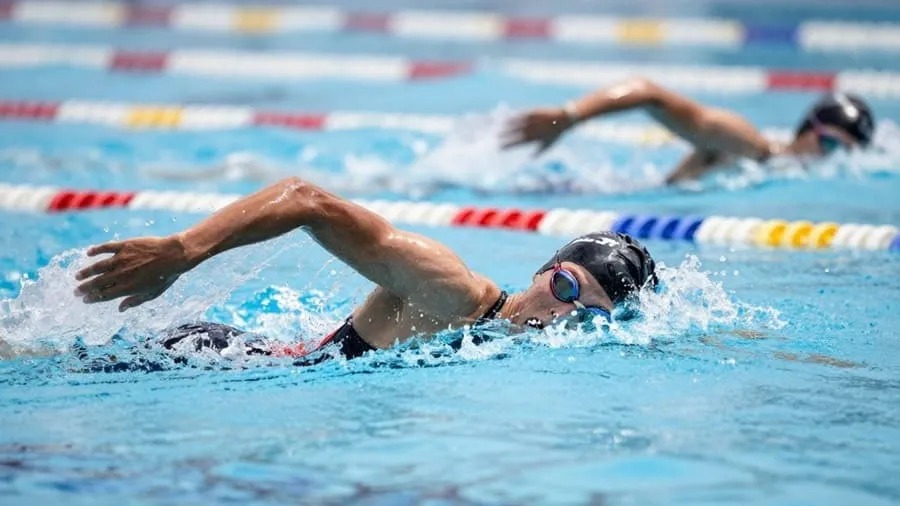
To make sure your swim leg in the Florida Triathlon is smooth sailing and not a struggle, keep these key points in mind. They’ll help you avoid common errors and build confidence in the water.
Key Takeaways
- Focus on a strong, efficient swimming technique to conserve energy.
- Practice your open water swimming skills before race day.
- Never try new gear or nutrition on race day; stick to what you’ve tested.
- Listen to your body and adjust your training plan as needed.
- Stay calm and focused in the water, especially during the start.
1. Swimtec
When you’re gearing up for the Florida Triathlon, especially if you’re new to the sport, focusing on your swim technique is a big deal. Many folks jump into Triathlon swim training Gainesville without really nailing down the basics, and that’s where things can get tricky. One of the most common pitfalls we see are freestyle breathing mistakes. It’s not just about getting air; it’s about how you do it without disrupting your whole stroke. Think about it: if you’re twisting your body too much to breathe, you’re losing momentum and creating drag. This can make even a short swim feel like an eternity.
To really get a handle on your open water swim technique, it helps to break down the breathing process. Instead of a big, dramatic head turn, aim for a subtle rotation of your head, keeping your body as flat as possible. Your goggles should barely break the surface. This minimal movement conserves energy and keeps you moving forward smoothly.
Here are a few common breathing errors to watch out for:
- Lifting your head too high out of the water.
- Taking too big a breath, causing you to bob.
- Holding your breath instead of exhaling steadily.
- Not rotating your body enough, leading to a jerky stroke.
Getting this right takes practice. Consider booking a session with a coach who can give you personalized feedback. Some places, like SwimTec, offer specialized prep sessions that can really make a difference. They focus on building that strong technical foundation you need.
Don’t underestimate the power of consistent practice. Even small adjustments in your breathing can lead to significant improvements in your speed and endurance during the swim leg. Focus on exhaling underwater and taking a quick, efficient breath when your body is naturally rotated to the side.
Remember, the goal is to make breathing feel like a natural part of your stroke, not an interruption. If you’re struggling, don’t hesitate to seek out resources or professional help. It’s a small change that pays off big time on race day. You might also want to check out the terms for services like SwimTec’s Water Safety Monitor if you’re training in open water without a dedicated coach present.
2. Wetsuit
Okay, let’s talk wetsuits. For many folks new to triathlon, the first thought is ‘warmth.’ And yeah, a wetsuit definitely helps keep you from getting too chilly, especially if you’re swimming in cooler Florida waters. But honestly, that’s not even the main reason you’ll want one. The biggest perk of a triathlon wetsuit is how it helps your body position in the water.
Think about it: when you’re swimming, you want to be as flat and streamlined as possible, right? Like a knife cutting through the water. But for many of us, especially if swimming isn’t your strongest suit, our legs tend to sink. It’s like dragging an anchor. This makes you work way harder than you need to and slows you down. A wetsuit, made from buoyant neoprene, lifts your lower half, helping you float higher and swim more efficiently. It’s like getting a speed boost without even trying harder.
It’s important to know that not all wetsuits are created equal. You can’t just grab any old surf wetsuit. Triathlon wetsuits are designed differently. They have more flexibility in the shoulders for a better stroke and rotation, and they’re built to keep you buoyant for longer periods of swimming. A surf wetsuit, on the other hand, is often stiffer and might not handle the constant movement of swimming as well. Plus, they’re made for short bursts of activity, not a sustained effort like a triathlon swim.
Here’s a quick rundown of why a triathlon-specific wetsuit is your friend:
- Buoyancy: Lifts your legs and hips, improving body position.
- Flexibility: Allows for a full range of motion in your shoulders and torso.
- Speed: Better body position means less drag and faster swimming.
- Warmth: Keeps you comfortable in various water temperatures.
If your race allows wetsuits, and you’re not a super strong swimmer, seriously consider getting one. It can make a huge difference in your confidence and your overall swim time. Don’t let a sinking feeling sink your race before you even get to the bike.
When picking one out, think about the water temps for your race. For many Florida races, a full suit is usually fine, but always check the race rules regarding water temperature and wetsuit legality. You don’t want to be disqualified for wearing one when you shouldn’t, or worse, be too cold because you didn’t wear one when you needed it. Getting the right fit is also key; it shouldn’t be too tight or too loose. You can find great advice on swim techniques and gear on sites like Swimtec.
3. Goggles
Alright, let’s talk goggles. These little things are more important than you might think for your Florida triathlon. You don’t want to be that person constantly stopping to empty water out of their mask, right? The right pair of goggles can make or break your swim experience. Look for a pair that fits snugly without digging into your skin. A good seal is key to preventing leaks. You’ll also want to consider visibility. For those bright Florida mornings, a pair with a smoke tint is a lifesaver, cutting down glare. But if it’s a cloudy day or you’re doing a lot of pool training, a clear or light-tinted lens is better. It’s honestly worth having two pairs: one for sunny days and one for overcast conditions. This way, you’re always prepared. Many athletes find that investing in a quality pair of goggles significantly improves their comfort and confidence in the water. It’s a small piece of gear that makes a big difference, especially when you’re trying to focus on your stroke and not on a leaky seal. Consider checking out options at a place like SwimTec’s Gainesville facility to see what feels best before race day.
4. Tri Suit
Okay, let’s talk about the tri suit. This is the one piece of gear that’s designed to go with you through all three parts of the race: the swim, the bike, and the run. It’s your all-in-one solution for comfort and efficiency. While you could technically wear a swimsuit and then change into bike shorts and running gear for your first, shorter race, a proper tri suit makes a huge difference. Think about it - no fumbling with zippers or changing clothes mid-transition. It’s all about streamlining your race day.
When picking out a tri suit, comfort is king. You don’t need the most expensive, aero-focused suit for your first go-around. What you do need is something that won’t chafe or hold too much heat. Look for suits made with breathable materials. The padding in the shorts part should be sufficient for your longest training rides but not so bulky that it becomes annoying on the run. Many athletes find that a suit with a shorter inseam is more comfortable for the run portion.
Here are a few things to consider when choosing your tri suit:
- Fit: It should feel like a second skin. Too loose, and you’ll get chafing. Too tight, and it’ll restrict movement and breathing.
- Material: Look for quick-drying, breathable fabrics. Mesh panels in certain areas can help with ventilation.
- Chamois: The padding should be comfortable for cycling but not so thick that it’s bothersome when you’re running.
- Pockets: Most tri suits have pockets on the back or sides for carrying nutrition like gels or bars. Make sure they’re secure.
Don’t try out a brand new tri suit on race day. Always test it on your long training rides and runs to make sure it doesn’t cause any irritation or discomfort. You want to be focused on your race, not on a nagging seam or a misplaced pad. Getting your gear dialed in during training is just as important as the physical workouts themselves. If you’re looking for personalized advice on gear and training, consider checking out triathlete training sessions.
Remember, the goal is to minimize distractions and maximize your performance. A well-fitting tri suit helps you do just that, allowing you to focus on swimming strong, biking hard, and running to the finish line.
5. Running Shoes
Alright, let’s talk about the shoes you’ll be pounding the pavement in. Picking the right running shoes is pretty important, especially when you’re training for something like a triathlon. You don’t want to be thinking about your feet when you should be focused on your pace.
The biggest mistake people make is thinking any old shoe will do, or worse, only using those super-cushioned, high-tech racing shoes for every single run. Those fancy shoes, while great for race day speed, can actually weaken your foot and ankle muscles over time because they do a lot of the work for you. Think of your feet and lower legs as springs; you want them to be strong and resilient on their own. Constantly running in shoes that over-support can mess with the integrity of your Achilles and calf muscles.
So, what’s the game plan?
- For daily training: Opt for a more neutral shoe with minimal support. This encourages your feet and lower legs to do the work, building strength and stability. It’s like letting your natural spring do its thing.
- For racing: Those super shoes? Save them for race day or maybe a few specific, fast training sessions. They’re designed for speed over short bursts, not for logging everyday miles.
- Daily wear: Try not to just live in your running shoes. When you’re walking around town, choose a simple, neutral shoe with a flat sole. This helps keep your feet strong even when you’re not actively running.
It’s about building a robust foundation. You want your feet to be ready for anything, and that means training them properly. Think about getting a good beginner pair that supports your body through all those miles. You can find some solid options for beginner running shoes that won’t break the bank.
Don’t let your footwear become a weak link. The goal is to build strength and resilience, not to rely on technology to do all the work. Your feet are your connection to the road; treat them right during training so they can carry you through race day.
Conclusion
Getting ready for the Florida Triathlon is a big deal, and while the swim is just one part, it’s often the one people worry about most. By focusing on good technique, practicing consistently, and not trying anything new on race day, you can make your swim leg a success. Remember, every training session gets you closer to that finish line. So, keep swimming, stay focused, and enjoy the journey to race day!
Frequently Asked Questions
What’s the biggest mistake beginners make in the swim?
A really common mistake is not practicing enough in open water. Swimming in a pool is different from swimming in a lake or the ocean. You need to get used to how the water feels, how to see where you’re going, and maybe even how to deal with waves or other swimmers around you.
Do I really need a wetsuit for the Florida Triathlon?
It depends on the water temperature on race day! Races usually have rules about wetsuits. If the water is warm enough, it might be optional. A wetsuit can help you float better, which is great if you’re not the strongest swimmer. But if you’re already a fast swimmer, it might not be necessary and could even feel too hot.
How can I improve my swimming stroke?
You can work on your stroke by taking lessons from a swim coach or using online resources that show good technique. Focus on things like how you breathe, how your arms move through the water, and how your legs kick. Small changes can make a big difference in how fast and easily you swim.
What should I do if I get nervous before the swim?
It’s totally normal to feel nervous! Try to focus on your breathing and remember all the training you’ve done. Set small goals for yourself, like just getting to the first buoy or keeping a steady pace. Don’t worry about what other swimmers are doing; just focus on your own race.
Is it okay to wear headphones during the swim?
Nope, no headphones allowed during any part of a triathlon race, including the swim. Race organizers want you to be aware of your surroundings for safety reasons. You need to be able to hear instructions and be mindful of other athletes.
What’s the best way to practice my swim start?
Getting a good start means practicing how you’ll enter the water. If it’s a deep-water start, practice diving in smoothly. If it’s a beach start, practice running into the water and starting to swim. The key is to make it feel familiar so you don’t waste energy or get flustered when the race begins.